Back to top

Quantified model selection

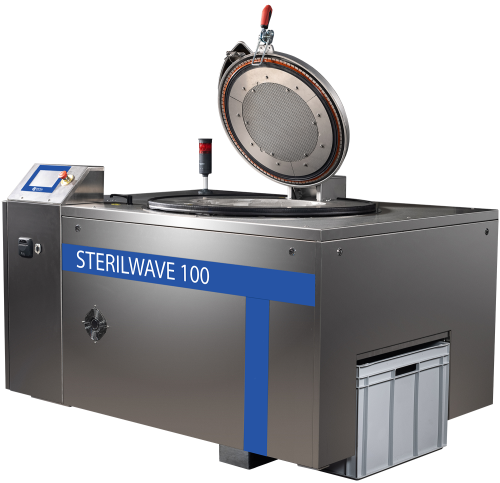
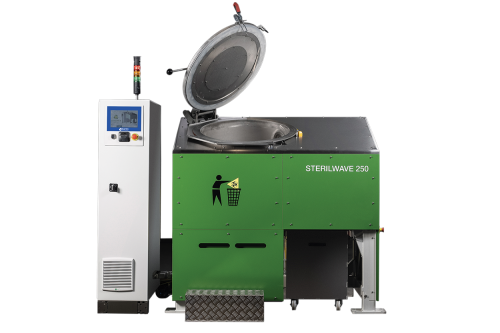
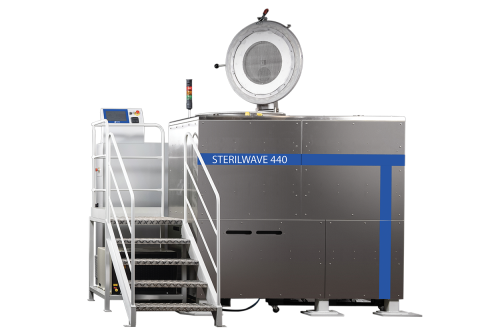
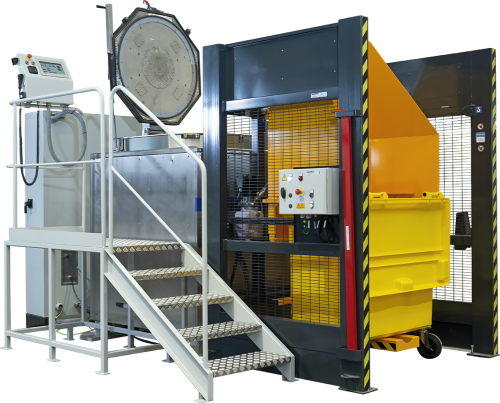
Choose the right Sterilwave model based on your waste volume and capacity needs

Selection is based on volume, composition, peaks, operating hours, site conditions and required availability.

Application note: Hourly capacity is based on a reference density of 0.1 kg/L. Annual capacity assumes 8 operating hours and 304 operating days. Actual capacity may be lower.

The process

Four steps, one closed process route

From eligible infectious clinical waste to a decontaminated and unrecognisable output.

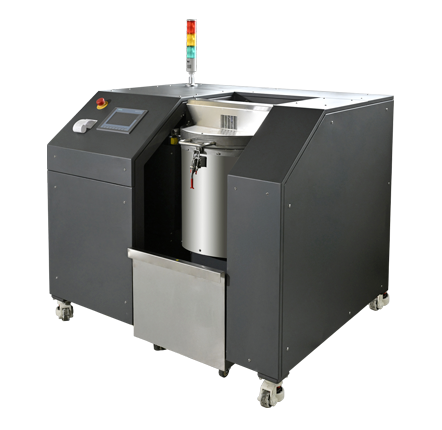
Sterilwave process for infectious clinical waste

Approximately 30 minutes per PLC-controlled cycle, with digitally traceable cycle data.

Waste acceptance

Which waste streams can be processed?

Suitability is determined by the actual composition, local rules, model conditions and the validated acceptance matrix.

Potentially eligible

Eligible infectious fraction

Sharps, contaminated plastics and textiles, and certain glass, metal or liquid-containing items when they fall within the accepted load and operating conditions.

Specific assessment

Exceptional or mixed streams

GMO-related, Category A and other exceptional biological waste, composite loads and fractions near mechanical limits require separate assessment.

Separate route

Excluded from the same route

Anatomical, pharmaceutical, cytotoxic, chemical, radioactive, pressurised and explosive waste requires a different route unless explicitly permitted and validated.

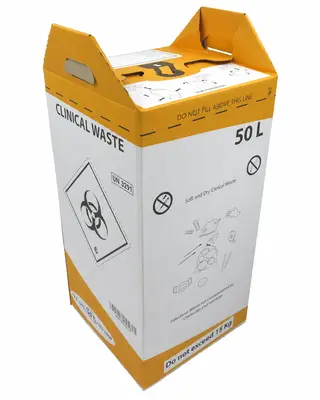
UN-certified SZA boxes can be an option

Where accepted, they may replace rigid containers and influence storage, handling, transport and material use.

The correct packaging route depends on the waste stream, internal workflow, transport rules and acceptance by the collector or recipient.

Technical conditions

Innovative and sustainable microwave decontamination without steam

The treatment cycle uses microwave heating rather than a steam generator. It does not produce steam condensate or liquid process effluent.

No steam generator

No steam supply is required for the treatment cycle.

No steam pressure

The vessel is not pressurised by steam as in a conventional autoclave process.

No liquid process effluent

The cycle does not require a drain for steam condensate. Cleaning and site utilities are still assessed locally.

Decision support for healthcare organisations

Compare solutions for infectious clinical waste

The choice is substantiated for each site on the basis of the waste profile, microbiological requirements, capacity, occupational safety, available facilities, logistics, permits, destination and total cost.

Applies to every solution: waste acceptance, validation, training, maintenance, process records, deviation management, relevant permits and a demonstrable destination must be arranged.

FactorSterilwaveAutoclaveExternal incinerationChemical decontamination
Treatment and locationOn-site decontamination through integrated shredding and microwave treatment in one closed vesselOn-site or central treatment with saturated steam under pressure. Shredding depends on the configurationUntreated infectious clinical waste is transported to a permitted external incineration facilityOn-site or external treatment with chemicals. Applicability depends on the waste stream and system
Required facilitiesElectricity, suitable workspace and appropriate air or vapour management. No steam generator or process water during the treatment cycleSteam, water, electricity, pressure equipment and usually condensate or wastewater drainageSecure storage, compliant packaging, regulated collection and transport. No treatment equipment at the healthcare facilityChemical storage and dosing, ventilation, personal protection and potentially water and wastewater management
Process control and validationValidated loading and cycle, waste acceptance matrix, digital cycle records and microbiological verification in accordance with the validation planValidated loading, time, temperature, pressure, steam penetration and control using appropriate indicatorsWaste acceptance and chain records at the processor. The facility controls incineration, emissions and residuesValidated concentration, contact time, mixing and waste penetration, plus control of chemical residues
Output and reductionShredded, dry, decontaminated and unrecognisable. Up to 80% reduction in waste volume and up to 25% reduction in waste weightDecontaminated, but without additional shredding, drying or compaction there is no guaranteed structural reduction in volume or weightAsh and other incineration residues. Substantial weight and volume reduction takes place at the external facilityThe result depends on the waste stream and system. Shredding or dewatering may be required
Logistics impactReduces storage time and external transport of untreated infectious waste. Collection of the decontaminated residue remains necessaryWhen installed on site, it reduces transport of untreated infectious waste. The treated material still requires collectionStorage, collection and transport of untreated infectious waste remain fully part of the chainOn-site treatment can reduce transport of infectious waste, but adds the supply, storage and management of chemicals
Residue and destinationRemoval as a treated residue after classification, acceptance and the permitted destination have been confirmedRemoval as treated waste. The destination depends on classification and acceptanceThe external processor manages ash and flue-gas cleaning residues. Energy recovery depends on the facilityThe destination also depends on remaining chemicals and any liquid residues
Route-specific documentationSite validation, cycle data, maintenance, permit assessment, residue classification and acceptance, waste contract and transport recordsSteam-cycle and load validation, pressure-equipment maintenance, permit assessment, output acceptance, waste contract and transport recordsWaste contract, acceptance conditions, transport records, treatment declaration and chain records. The processor holds the installation permitChemical safety documentation, dosing validation, occupational safety, residue management, permit assessment and waste records

Final assessment: A site-specific waste analysis, validation, permit assessment, cost calculation and confirmed disposal route are required before a final choice. SimpleComply brings these elements together in one substantiated business case.

PLC control & traceability

Automated control and reproducible process steps

The touchscreen interface guides the operator, while the PLC controls the cycle, monitors the process phases and records relevant data. Operator involvement is typically concentrated in 5 to 10 minutes per cycle; the exact time depends on the model, loading method and local workflow.

1

Automated cycle

Preset process logic controls shredding and microwave heating.

2

Digital process records

Cycle and result data support quality assurance and traceability.

3

Loading matched to the model

Loading is manual on compact models and can be automatic or optional on selected larger configurations.

4

Remote monitoring and service

When configured, operational data can be monitored remotely and an IP connection supports diagnostics and maintenance.